
The technical advantages of liquid die forging machines
The technical advantages of liquid die forging machines in the production of thick-walled aluminum alloy castings
Thick-walled aluminum alloy castings are widely used in automotive, construction machinery, aerospace and other fields. Liquid die forging (extrusion casting) has unique technical advantages in the production of thick-walled castings.
Challenges in thick-walled castings
The main quality challenges of thick-walled castings are shrinkage cavities and shrinkage porosity. Due to the large wall thickness, the metal liquid takes a long time to solidify, and if the volume shrinkage during solidification cannot be adequately replenished, shrinkage cavities or shrinkage porosity defects will form inside the casting.
Shrinkage cavities and shrinkage porosity not only reduce the mechanical properties of the casting but also may cause poor air tightness and reduced fatigue life. For critical parts such as hydraulic components and pressure-bearing components, shrinkage porosity defects are unacceptable. Quality defects such as shrinkage cavities and shrinkage porosity in castings of new energy vehicle thick-walled castings with significant wall thickness variations are key issues of concern in the industry.
Solutions for liquid die forging
Liquid die forging applies high mechanical pressure to the liquid metal injected into the mold to cause it to solidify under pressure. The pressure can force replenishment, eliminating shrinkage cavities and shrinkage porosity. The casting solidifies under pressure, resulting in a dense structure and a density close to the theoretical density.
The extrusion die casting forging process uses the main cylinder power to implement full projection surface forging replenishment. The core parameter "forging pressure ratio" specifically refers to the absolute pressure directly acting on the ingot during the solidification stage. This process feature includes the participation of the mold forming surface in the forging, the elimination of casting defects, and the formation of a forged microstructure with fragmented grains.
Application of multi-stage pressure
For castings with significant wall thickness differences, the multi-stage pressure function can play an important role. During the solidification of the casting, different wall thickness sections solidify at different rates, requiring different pressure replenishment for each section. By adjusting the pressure in stages, precise replenishment can be achieved for different sections.
The structure of the liquid die forging pressurization equipment with a central local extrusion function can achieve multiple extrusions for thick-walled or castings with significant wall thickness differences. The rapid and flexible unlocking mold mechanism and the intelligent control technology for the four corners of the mold force adjustment of liquid die forging further enhance the process adaptability of the equipment.
Heat treatment performance
Liquid die forged parts can undergo T6 heat treatment, further enhancing their mechanical properties. After T6 heat treatment, liquid die forged parts have significantly improved tensile strength, yield strength and elongation, meeting the requirements for high-strength parts.
Application fields
Liquid die forging is suitable for manufacturing thick-walled and high-demand parts such as control arms, subframes, hydraulic valve bodies, and aerospace structural components. This technology has been widely applied in the manufacturing of automotive parts, defense and military industries, as well as the field of composite materials. It has promising application prospects in areas such as new energy vehicles and construction machinery hydraulic components.
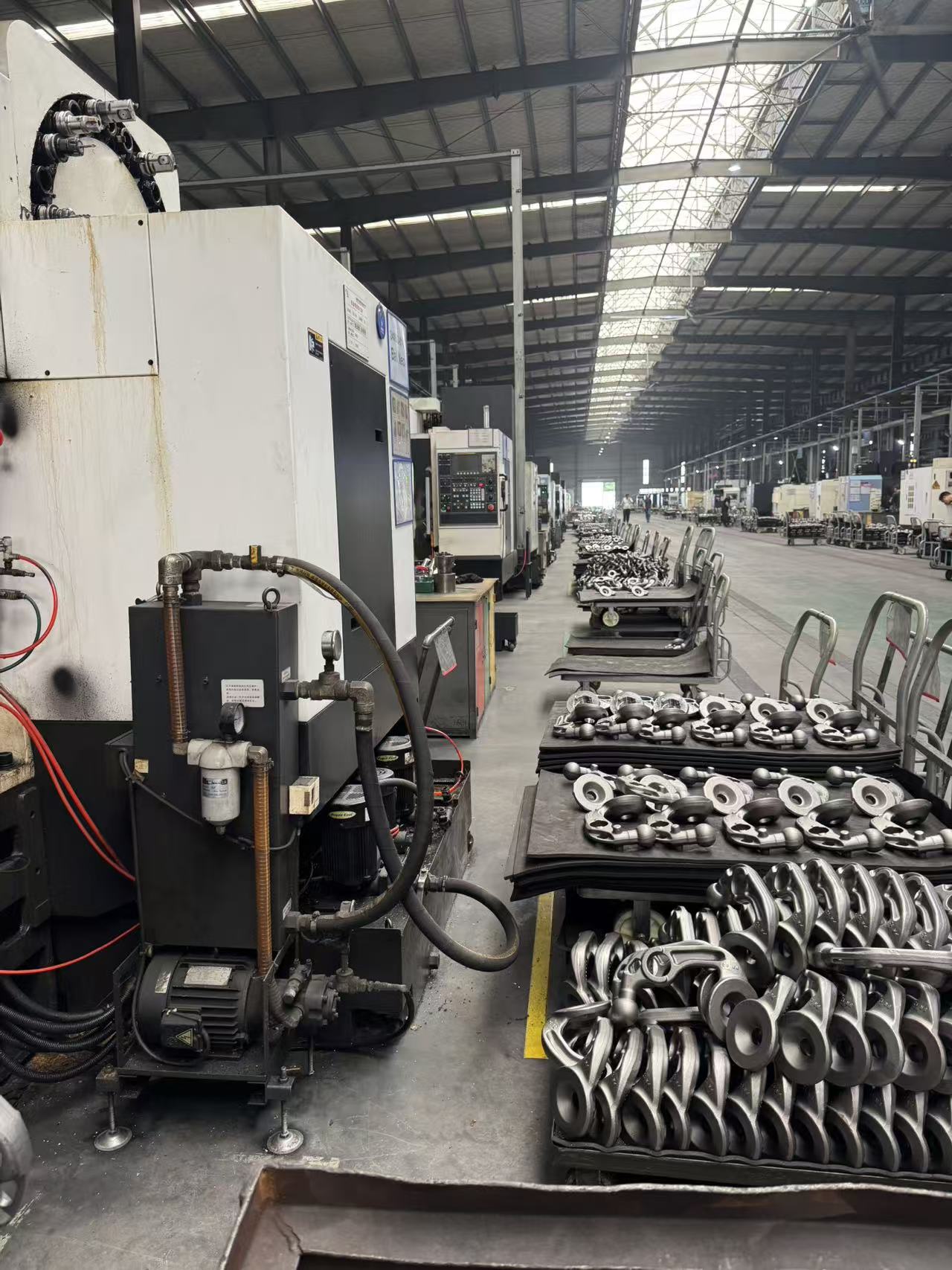
this is forging produced by yidu tongxin precision forging company
Send Inquiry



X
We use cookies to offer you a better browsing experience, analyze site traffic and personalize content. By using this site, you agree to our use of cookies.
Privacy Policy