
Typical precision forging technology
Typical precision forging technology
Precision forging refers to a forming technique where a part is shaped and then requires only minimal processing or no further processing to meet the dimensional accuracy requirements of the part. The approaches to achieving precision forging include two main methods: refining the blank, which involves directly forging a blank that meets the requirements for precision machining; and precision forgings, where the entire or certain parts of the forging are directly processed using the precision forging technique, thereby reducing the machining volume. Currently, there are many precision forging processes applied in production. According to the different forming temperatures, they can be classified as hot precision forging, cold precision forging, warm precision forging, and composite precision forging, etc.
1. Hot precision forging
Hot precision forging refers to the precision forging process carried out above the recrystallization temperature. Due to the high deformation temperature, the deformation resistance of the material is low and the plasticity is good, making it easier to shape complex geometries of parts.
2. Cold precision forging
Cold precision forging is a precision forging forming technique carried out at room temperature. Since the forming is done at room temperature, it avoids the dimensional errors caused by thermal expansion and contraction, so the shape and size of the workpiece are easier to control, and the surface of the forging does not produce oxidation and burning, etc., resulting in a higher surface quality. Therefore, the forging accuracy of hot precision forging and warm precision forging is lower than that of cold precision forging.
3. Warm precision forging
Warm forging is a precision forging technology that involves heating the metal to a temperature below the recrystallization temperature for forging. It combines the advantages of hot forging and cold forging while avoiding their drawbacks, effectively reducing the load on equipment and molds, improving the plasticity and fluidity of the metal, and eliminating the need for tempering.
4. Composite precision forging
Composite precision forging is a forging technology that combines cold, warm, and hot forging processes to complete the forging of a single part. It can leverage the advantages of cold, warm, and hot forging while avoiding their disadvantages. At the same time, parts produced using the composite precision forging process have improved mechanical properties, dimensional accuracy, and surface quality compared to those produced using a single forging technique. Currently, the commonly used composite precision forging processes include warm forging - cold finishing, hot forging - cold forging, warm extrusion - cold rolling, warm-thermal precision forging - cold extrusion, and hot precision forging - cold rolling.
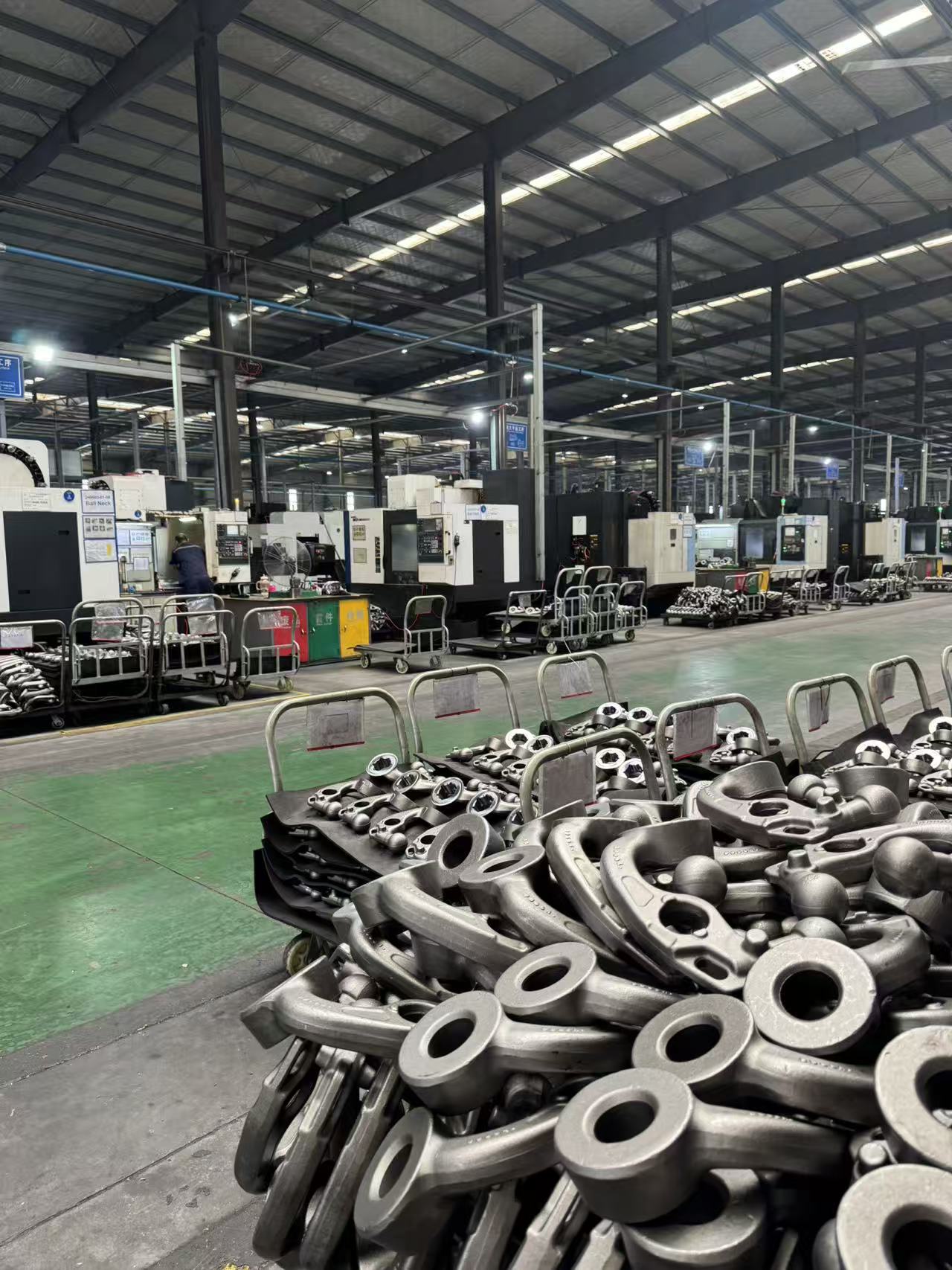
this is forging plant of tongxin
Send Inquiry



X
We use cookies to offer you a better browsing experience, analyze site traffic and personalize content. By using this site, you agree to our use of cookies.
Privacy Policy