
Unveiling the Craftsmanship and Innovation Behind the Casting Manufacturing Process
Unveiling the Craftsmanship and Innovation Behind the Casting Manufacturing Process
In the precision chains of industrial manufacturing, forgings serve as the core components of the critical process, and their performance and quality are shaped by meticulous manufacturing techniques. From the ancient ironworking skills to the modern precision forging that integrates advanced technologies, the forging manufacturing process has evolved over thousands of years. Each technological innovation has propelled industrial development to new heights and has become an indispensable "craftsmanship code" in the industrial field.
Free forging is one of the basic and widely used forging processes. It applies simple tools, such as an anvil and a hammer, to exert pressure on the heated metal billet, causing it to undergo plastic deformation. During free forging, the metal billet freely moves in the horizontal and vertical directions. Operators use experience and skills to control the degree and direction of metal deformation, thereby shaping the desired shape. This process is highly flexible and suitable for single-piece, small-batch production, as well as the manufacturing of large forgings. For example, anchor chains for giant ships and main shafts for large hydro turbines can be initially formed through free forging. However, free forging requires high skills from workers and the dimensions of the forgings are relatively less precise. Subsequently, a large amount of mechanical processing is often needed.
Die forging brings high precision and efficiency to forging component manufacturing. During die forging, the heated metal billet is placed in a pre-designed die cavity, and under the powerful pressure of a press machine, the metal billet is forced to flow and fill the cavity, resulting in a forged part that matches the shape of the die. Depending on the equipment and die type, die forging can be divided into hammer-on die forging and hot die forging press die forging. Compared to free forging, die forging produces forgings with higher dimensional accuracy and better surface quality, capable of manufacturing complex-shaped parts and suitable for mass production. Precision forgings for automotive engine crankshafts and aircraft engine blades are often manufactured using die forging, significantly enhancing production efficiency and product quality consistency.
In addition to free forging and die forging, shell forging plays a unique role in forging component manufacturing. Shell forging is a process that uses movable dies on free forging equipment to produce forgings. It combines the flexibility of free forging with the forming advantages of die forging. For some less complex shapes and small production batches of forgings, using shell forging can reduce mold costs and shorten the production preparation period. In small mechanical manufacturing enterprises, shell forging is often used to produce various small parts, such as gears and flanges, at a lower cost to meet diverse production needs.
With the advancement of technology, forging manufacturing processes continue to innovate and break through. Isothermal forging technology precisely controls the forging temperature and speed, allowing the metal to deform under constant temperature, enabling the production of high-end forged parts with uniform structure and excellent performance, commonly used in the manufacturing of titanium and high-temperature alloy components in aerospace fields; precision forging technology uses advanced die design and manufacturing processes to achieve near-net shape of forgings, reducing subsequent processing allowances, improving material utilization, and lowering production costs; the application of digital simulation technology allows for computer simulation of the metal's deformation process before forging, predicting potential defects, optimizing forging process parameters, and significantly increasing the success rate and quality stability of forging component manufacturing.
From traditional processes to modern technologies, each transformation of forging manufacturing processes embodies human wisdom and craftsmanship. These processes not only shape the shape of forgings but also endow them with strong performance and reliable quality. In the future, with the continuous emergence of new materials and technologies, forging manufacturing processes will continue to innovate, injecting more power into industrial manufacturing and forging out more "steel pillars" supporting modern industrial development.
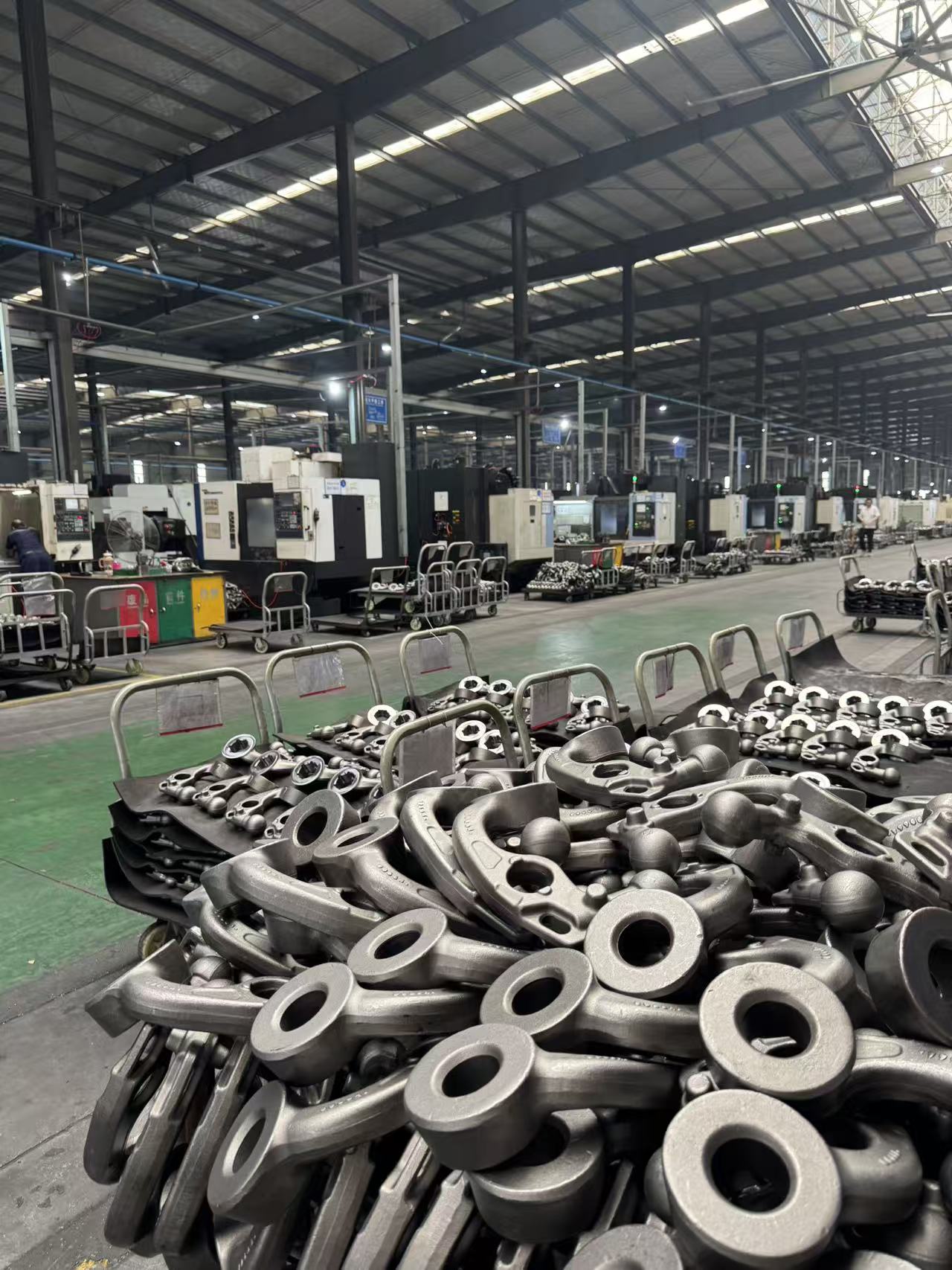
this tongxin precision forging production
Send Inquiry



X
We use cookies to offer you a better browsing experience, analyze site traffic and personalize content. By using this site, you agree to our use of cookies.
Privacy Policy