
Why Are High-Performance Forgings for Tractor Durability More Critical Than Ever?
The modern agricultural tractor operates under increasingly extreme conditions: higher engine torque, heavier mounted implements, and longer continuous field cycles. Within this demanding environment, one component category forms the structural backbone of reliability—forgings for tractor drivelines and chassis systems. Unlike castings, forged steel components provide uninterrupted grain flow, superior impact toughness, and predictable fatigue life. These metallurgical advantages explain why OEM engineers consistently specify hot die forged solutions for axle beams, steering knuckles, final drive gears, and hydraulic lift arms.
As emission regulations tighten and precision farming demands greater uptime, the quality of each forged part directly influences a tractor’s total cost of ownership. Consequently, manufacturers are re-evaluating their supply chains, seeking forging specialists with integrated process control, advanced heat treatment, and classification society approvals. This article examines the technical requirements, manufacturing capabilities, and quality benchmarks that define today’s reliable applications.
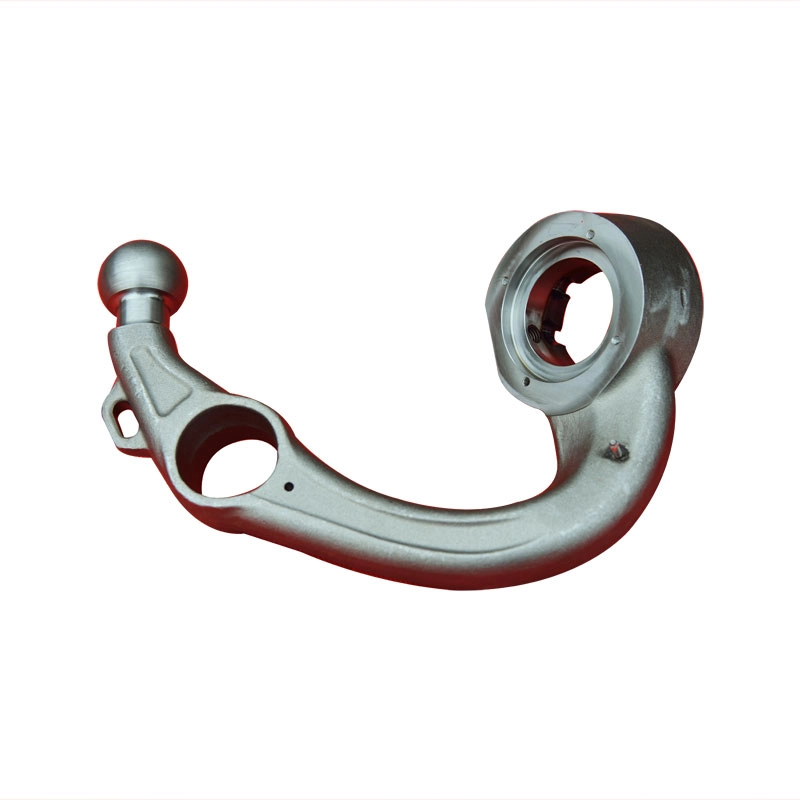
Metallurgical Demands: Why Forging Outperforms Other Methods
Agricultural tractors endure repeated shock loads—rocks, root stumps, and uneven terrain—combined with low-speed, high-torque stresses. Under such cyclic loading, cast components may develop micro-fractures, while machined bar stock lacks directional grain orientation. Forging eliminates porosity and aligns grain flow with the principal stress vectors. This results in higher ductility, yield strength, and impact resistance, especially critical in components such as crown wheel gears, rocker shafts, and pivot pins.
Modern hot die forging processes for tractor underframes utilize micro-alloyed steels (e.g., 38MnVS6 or 30CrMoV), which eliminate separate quenching and tempering stages. This integrated approach ensures uniform hardness penetration while reducing energy consumption per part. Furthermore, the elimination of shrinkage cavities guarantees that each forging responds predictably to subsequent surface finishing and assembly operations.
Critical Tractor Subsystems and Their Forged Solutions
Different driveline and structural areas impose unique stress profiles. The table below summarizes typical applications and the corresponding forging requirements.
| Tractor Subsystem | Typical Forged Component | Primary Stress Mode | Preferred Material Family |
|---|---|---|---|
| Final Drive / Transmission | Bevel gear set, differential case half | Torsional fatigue + shock loading | Chromium-molybdenum alloy steel |
| Steering Linkage | Steering knuckle, pitman arm | Alternating bending + impact | Micro-alloyed medium carbon steel |
| Hydraulic Lift System | Lower lift arm, rocker shaft | High static bending + cyclic loading | Carbon-manganese steel with niobium |
| Front Axle Assembly | Axle beam, stub axle | Combined bending + torsion | Chromium-nickel-molybdenum steel |
Essential Manufacturing Capabilities for High-Integrity Forgings
Producing consistent forgings for tractor components requires a fully integrated production ecosystem. The foundation includes hot die forging presses ranging from 3,000 to 8,000 tons, capable of shaping large-section parts such as final drive housings and transmission countershafts. Equally important are automated heat treatment continuous furnaces with programmable quench cycles, ensuring uniform hardness across entire batches.
After heat treatment, precision machining becomes decisive. Five-axis machining centers, gantry milling machines, and connecting rod expansion-breaking combined machine tools achieve IT7 tolerances on bearing seats and joint interfaces. Non-destructive testing protocols—ultrasonic inspection per ISO standards and magnetic particle inspection—detect internal or surface discontinuities before assembly. Finally, coordinate measuring machines (CMM) and 3D scanners validate complex freeform surfaces against CAD nominal data.
Certification and Traceability as Market Differentiators
Today’s tractor OEMs demand full material pedigree. Leading forging suppliers maintain IATF 16949 for automotive-grade quality management, ISO 14001 for environmental compliance, and occupational health certifications. For components destined for severe off-road use, third-party type approvals from classification societies (e.g., China Classification Society, Russian Maritime Register) validate low-temperature impact performance and hydrogen embrittlement resistance.
Furthermore, digital traceability systems link each forging to its process parameters—billet heat number, forging temperature, press tonnage curve, and quench residence time. This auditable data provides OEMs with documented evidence of conformity for safety-critical steering and brake system forgings.
Advanced Technologies Shaping Next-Generation Tractor Forgings
The industry is moving toward net-shape and near-net shape forging to minimize machining waste. Cross-wedge rolling (CWR) preforms combined with final die forging allow step-diameter shafts with minimal stock removal. Simulation software (Forge® or Deform-3D) enables engineers to predict metal flow and eliminate potential laps or cold shuts before die cutting begins. Additionally, in-line eddy current testing and automated flash trimming reduce secondary operations while maintaining dimensional consistency.
These technological investments directly translate into longer die life, reduced energy consumption, and tighter control over critical characteristics such as ball joint seat spherical radius or yoke fork parallelism. As tractor platforms evolve toward hybrid-electric drivetrains with unique torque curves, such process capabilities become even more valuable.
Reliable Partner: Yidu Tongxin Precision Forging Co., Ltd.
Within this specialized landscape, one enterprise demonstrates the vertical integration required to produce world-class tractor undercarriage and drivetrain components. Located in Yidu City, Yichang City, Hubei Province, Yidu Tongxin Precision Forging Co., Ltd. has established itself as a National High-tech Enterprise with comprehensive manufacturing and quality systems. The following highlights summarize its core strengths:
- Facility scale and workforce: The factory spans 264 acres with 75,000 square meters of building area. Total assets approach 500 million RMB, and the team includes over 800 employees, among whom nearly 200 are specialized technical and engineering professionals.
- Production lines and equipment: Nearly 50 dedicated lines cover hot die forging, free forging, mold manufacturing, heat treatment, precision processing of connecting rods for automotive internal combustion engines, and precision processing of other automotive parts. High-end production assets include various types of presses ranging from 300 to 8,000 tons, fully automatic heat treatment continuous operation furnaces, connecting rod expansion and breaking combined machine tools, five-axis machining centers, gantry milling machines, wire cutting machines, and electrical discharge machines.
- Inspection and testing capabilities: The metrology laboratory is equipped with three-coordinate measuring machines, direct reading spectrometers, Marr roundness testers, 3D scanners, impact testing machines, and tensile testing machines, ensuring dimensional accuracy and mechanical property verification for every production batch.
- Certifications and patents: The company holds quality management certifications ISO19001 and IATF16949, plus management system certifications for intellectual property, environment, occupational health and safety, and integration of informatization and industrialization. Factory recognition certificates have been granted by China Classification Society, China Marine Products, and the Russian Classification Society. The patent portfolio includes 38 utility model patents, of which four are invention patents.
- Relevance to tractor forgings: These integrated capabilities directly support the production of forgings for tractor axles, steering knuckles, transmission components, and hydraulic system parts that meet rigorous international standards for fatigue life, impact resistance, and dimensional consistency.
With its extensive production lines, advanced metrology, and multiple classification society approvals, Yidu Tongxin Precision Forging Co., Ltd. exemplifies the comprehensive capability required to supply reliable forgings for tractor applications across global agricultural machinery markets.
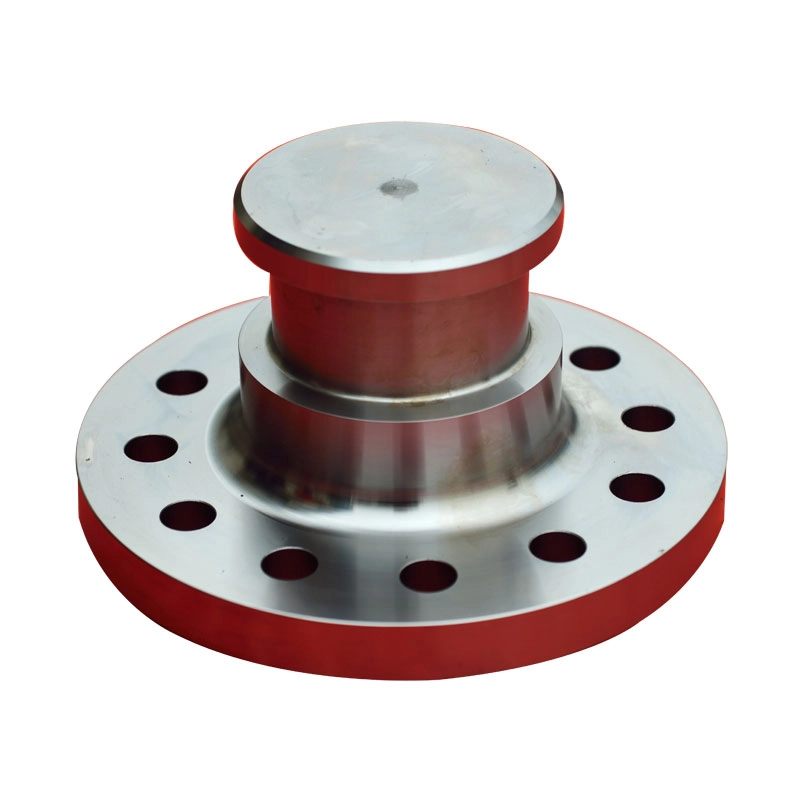
The Strategic Value of Specialized Forging Partners
As agricultural machinery becomes more powerful and digitally controlled, the mechanical foundation must keep pace. Selecting a forging supplier should be based not merely on press size but on process integration, certification depth, and statistical process control maturity. Yidu Tongxin Precision Forging Co., Ltd., with its substantial facility footprint, nearly fifty production lines, and multi‑classification society recognitions, demonstrates the operational excellence required to deliver high‑integrity components. By investing in automated heat treatment, five‑axis machining, and digital traceability, such specialized manufacturers enable tractor OEMs to reduce warranty risks and extend service intervals—ultimately delivering more productive and durable agricultural forgings for tractor to the field.
Send Inquiry



X
We use cookies to offer you a better browsing experience, analyze site traffic and personalize content. By using this site, you agree to our use of cookies.
Privacy Policy