
Forging technology knowledge
Forging technology knowledge
Forging has a long history in China and it has been passed down through the production methods of hand workshops. It gradually emerged in industries such as railways, military industry, and shipbuilding in the early 20th century, using mechanized industrial production methods. The main sign of this transformation was the use of machines with strong forging capabilities.
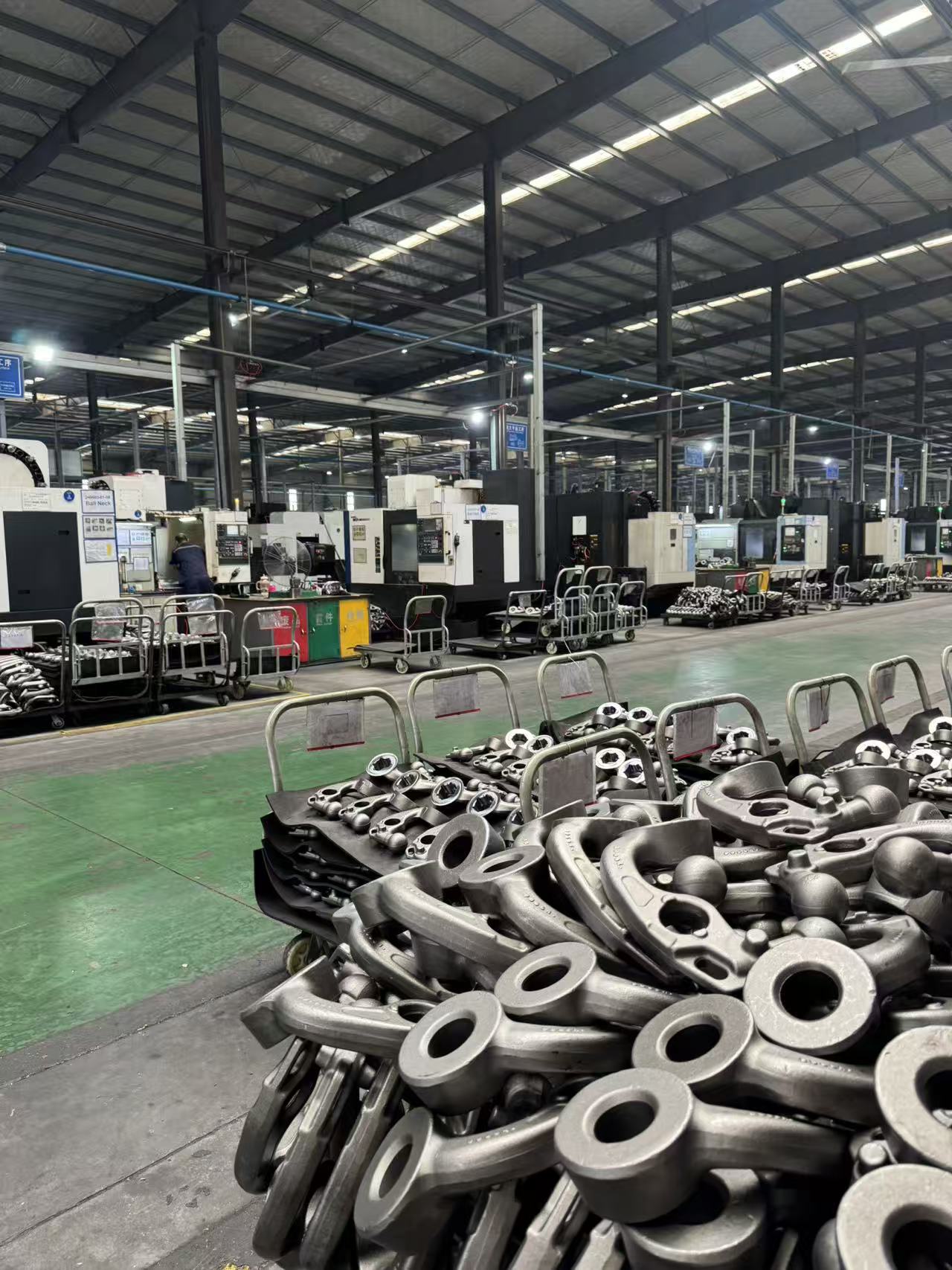
In the process of automobile manufacturing, the processing method of forging is widely adopted. With the advancement of technology and the increasing demand for the precision of workpieces, the precision forging technology with advantages of high efficiency, low cost, low energy consumption, and high quality has been increasingly widely applied. According to the different deformation temperatures during metal plastic forming, precision cold forging can be divided into cold forging, temperature forging, sub-temperature forging, and hot precision forging. The produced automotive components include: clutch ring of the car, input shaft parts of the car transmission, bearing rings, sliding sleeve series of automotive universal joints, differential gears of the car, front axle of the car, etc.
2. Classification of Forging
According to different production tools, forging technology can be divided into free forging, modular forging, ring rolling, and special forging.
Free forging: It refers to the processing method of using simple universal tools or directly applying external force between the upper and lower anvil of the forging equipment to deform the blank and obtain the required geometric shape and internal quality of the forging.
Modular forging: It refers to the metal blank being deformed under pressure in a certain-shaped forging die to obtain the forging. Modular forging can be divided into hot modular forging, warm forging, and cold forging. Warm forging and cold forging are the future development directions of modular forging and also represent the level of forging technology.
Ring rolling: It refers to the production of different diameter ring-shaped parts by using a dedicated ring rolling machine, and it is also used to produce wheel-shaped parts such as car wheels, train wheels, etc.
Special forging: It includes roll forging, wedge cross rolling, radial forging, and liquid mold forging. These methods are more suitable for producing certain special-shaped parts. For example, roll forging can be used as an effective pre-forming process, significantly reducing the subsequent forming pressure; wedge cross rolling can produce steel balls, transmission shafts, etc.; radial forging can produce large gun barrels, step shafts, etc. of large-scale forging.
According to the forging temperature, forging technology can be divided into hot forging, warm forging, and cold forging.
The starting recrystallization temperature of steel is approximately 727℃, but 800℃ is generally adopted as the dividing line. Above 800℃ is hot forging; between 300 and 800℃ is called warm forging or semi-hot forging, and forging at room temperature is called cold forging. For most industries, the forged parts are hot forging, while warm forging and cold forging are mainly used for the forging of automotive and general machinery parts. Warm forging and cold forging can effectively save materials.
According to the movement mode of the forging die, forging can also be divided into swing rolling, swing spinning forging, roll forging, wedge cross rolling, ring rolling, and inclined rolling methods.
Previous:Precautions for Induction Hardening
Send Inquiry



X
We use cookies to offer you a better browsing experience, analyze site traffic and personalize content. By using this site, you agree to our use of cookies.
Privacy Policy