
How Does Open Die Forging Enhance Industrial Component Performance?
Open die forging is a highly versatile metalworking process that reshapes metal under compressive forces without using a confined die. Unlike closed-die forging, which forms metal into a specific cavity, open die forging allows free movement of the workpiece between the forging dies, enabling the production of large, complex, and highly reliable components.
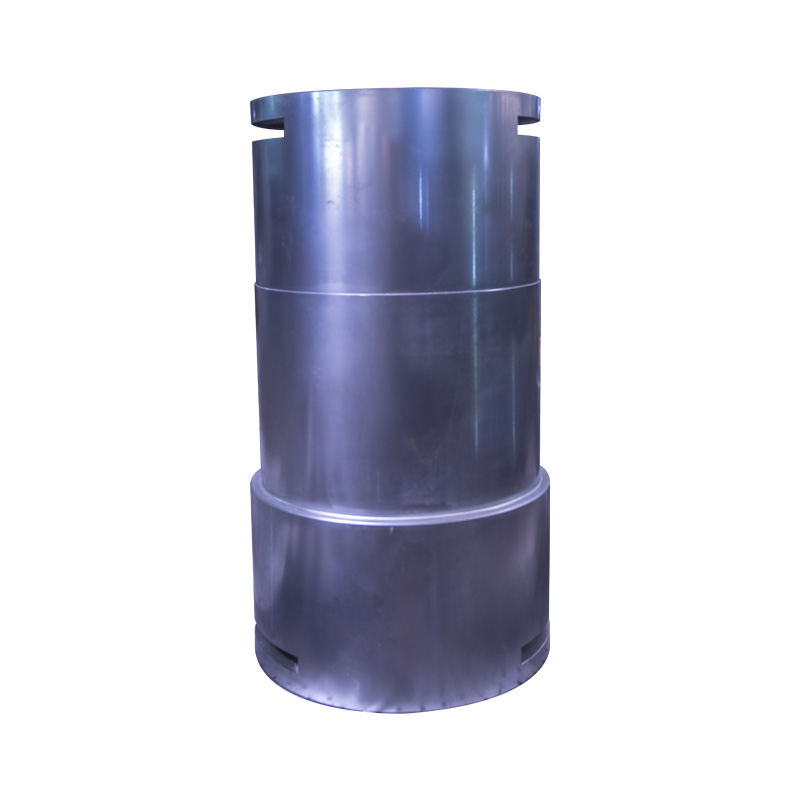
The main objective of this article is to explore how open die forging optimizes material properties, supports large-scale production, and contributes to the future of industrial manufacturing. Detailed product parameters, functional advantages, and common technical questions are discussed to provide a comprehensive understanding for engineers, procurement specialists, and industrial designers.
How Does Open Die Forging Work to Improve Mechanical Properties?
Open die forging works by applying repetitive compressive forces on a heated metal billet using flat or contoured dies. This process not only shapes the metal but also enhances its internal structure. The following aspects explain its working mechanism:
-
Grain Flow Control: The repeated deformation refines the grain structure, aligning it along the direction of applied stress. This alignment improves tensile strength and fatigue resistance.
-
Reduction of Porosity and Defects: Open die forging closes internal voids and reduces metallurgical defects, resulting in higher-quality components.
-
Versatility in Size and Shape: Unlike closed die forging, there are minimal restrictions on workpiece dimensions. Components ranging from small shafts to large rotor discs can be produced efficiently.
-
Enhanced Mechanical Performance: The combination of grain refinement and defect elimination leads to superior impact resistance, ductility, and wear performance.
Typical Product Parameters of Open Die Forging Components:
| Parameter | Description | Range/Value Example |
|---|---|---|
| Material Types | Carbon Steel, Alloy Steel, Stainless Steel, Titanium | ASTM A105, AISI 4340, Ti-6Al-4V |
| Component Weight | Maximum feasible weight for single billet forging | 100 kg – 50,000 kg |
| Dimensions | Length and diameter variations | 100 mm – 3,500 mm length, Ø50 – Ø2,000 mm |
| Forging Temperature | Optimal heating range | 1,050°C – 1,250°C for steel |
| Tolerances | Dimensional and geometric | ±0.5% length, ±1–2% diameter |
| Hardness | Achievable hardness post-forging | 200–350 HB depending on material |
| Surface Finish | Standard finish after forging and machining | Ra 3.2–6.3 μm |
Open die forging is especially effective for parts that require consistent material performance under extreme loads. For example, large industrial shafts, turbine disks, and high-pressure valve components benefit from this process, which ensures reliability in high-stress applications.
How Does Open Die Forging Support Customization and Manufacturing Flexibility?
One of the key advantages of open die forging is its ability to handle customized component designs without requiring expensive tooling. This flexibility is crucial for industries dealing with unique specifications or low-volume production.
Customization Capabilities:
-
Adjustable Die Shapes: While the dies remain flat or contoured, the operator can control hammer strokes, rotation angles, and forging sequences to produce various geometries.
-
Variable Material Compositions: Open die forging can accommodate different alloy compositions, enabling designers to optimize performance for specific applications.
-
Scalability: From single-piece prototypes to large-scale industrial runs, open die forging adapts easily, maintaining consistent quality across sizes.
How does this impact lead time and cost?
-
Reduced tooling costs: There’s no need for complex molds or dies.
-
Faster design changes: Modifying component dimensions or alloy types does not require new die fabrication.
-
Efficient production of large parts: The ability to forge oversized components in a single piece reduces assembly requirements and improves structural integrity.
Common Applications Benefiting from Open Die Forging:
-
Aerospace Components: Engine shafts, landing gear struts, and high-strength fasteners.
-
Energy Sector: Turbine rotors, generator shafts, and pipeline flanges.
-
Heavy Machinery: Press rolls, crane shafts, and construction equipment components.
This flexibility allows manufacturers to meet diverse industrial standards while maintaining high performance and reliability.
How Does Open Die Forging Contribute to Industry Trends and Future Manufacturing Needs?
The future of industrial manufacturing emphasizes sustainability, efficiency, and high-performance materials. Open die forging aligns with these trends in several ways:
-
Energy Efficiency: The process can optimize material usage by reducing scrap and minimizing machining requirements. Less energy is consumed in producing high-strength components compared to casting or machining from solid blocks.
-
Sustainability: By using high-reliability forged components, industries reduce failure rates and extend the service life of critical equipment, indirectly reducing material and energy waste.
-
Integration with Advanced Materials: Open die forging is compatible with high-performance alloys, including nickel-based superalloys and titanium, which are increasingly demanded in aerospace, defense, and renewable energy sectors.
-
Digitalization and Process Control: Modern forging facilities integrate sensors and process monitoring, allowing precise control of temperature, strain, and hammer strokes to improve repeatability and traceability.
Common Questions About Open Die Forging:
Q1: How is the dimensional accuracy maintained in open die forging?
A1: Dimensional accuracy is achieved through skilled control of die positioning, hammering sequences, and rotation of the workpiece. While tolerances are generally looser than closed-die forging, post-forging machining can refine dimensions to meet strict specifications.
Q2: How does open die forging improve fatigue resistance?
A2: Fatigue resistance is enhanced by aligning the internal grain flow along stress paths, reducing stress concentrations and eliminating internal voids or inclusions. This process results in components capable of withstanding cyclic loading over extended periods.
By answering these technical questions, industries can better understand the advantages of open die forging and its role in producing long-lasting, high-performance parts.
How Tongxin Ensures Quality and Reliability in Open Die Forging
Tongxin is committed to delivering high-quality open die forged components that meet rigorous industrial standards. With decades of experience, advanced forging facilities, and skilled engineers, Tongxin combines traditional forging craftsmanship with modern process control technologies.
Why choose Tongxin?
-
Precision Engineering: Each component undergoes strict dimensional inspection and metallurgical testing.
-
Material Expertise: Tongxin sources premium-grade alloys tailored to client specifications.
-
Process Optimization: Open die forging sequences are designed to maximize grain flow alignment and mechanical performance.
-
Customer Support: From prototype to full-scale production, Tongxin offers end-to-end technical support.
Open die forging remains a key solution for industries seeking reliability, flexibility, and superior performance in metal components. For inquiries about specific projects, materials, or custom forging solutions, Tongxin encourages potential clients to contact us directly to discuss requirements, receive expert guidance, and explore how open die forging can enhance their industrial applications.
Send Inquiry



X
We use cookies to offer you a better browsing experience, analyze site traffic and personalize content. By using this site, you agree to our use of cookies.
Privacy Policy